
You revive a stalled deal by finding out why it stopped, not by sending another "just checking in." Work out whether the deal is stuck, dead or merely slow. Name the real blocker. Reopen the conversation with something new for the buyer. Then agree on a dated next step with everyone who has a say. If none of that works within a set window, close the deal out so your forecast stays honest. That is the routine we have built a career around as a sales leader, and it is the one below.
This guide is written for CEOs, CROs and founders who own a number and have a pipeline full of opportunities that went quiet. It also shows what to demand from the sales development or business development leader you hire to fix it.
TL;DR
- A stalled deal is a pipeline problem and a forecasting problem. Gartner advises sales chiefs to diagnose root causes first and then match the tactic to the cause.
- Sort every quiet deal into one of three groups: slow, stuck or dead. Each gets a different move.
- Re-engage with new information, a changed priority or a smaller ask, never with a generic nudge.
- Widen the conversation beyond one champion and write a mutual action plan with dates.
- Set a clear deadline to resurrect, re-stage or close each stalled deal. Discounts come last, not first.
Table of Contents
- Why deals stall in the first place
- Step 1: Sort quiet deals into slow, stuck and dead
- Step 2: Find the real blocker
- Step 3: Re-engage the person who went quiet
- Step 4: Widen the buying group
- Step 5: Agree on a clear next step, in writing
- When a discount or concession helps
- Step 6: Set the deadline, then close out what will not move
- A 30-minute weekly routine for stalled deals
- Our perspective
- Work with Chad on your pipeline
- FAQ
- Sources
Why deals stall in the first place
Deals rarely stall because the buyer hates your product. They stall because something changed, or because something was never settled. The usual causes fall into five groups:
- The pain faded. The problem that justified the meeting is no longer urgent, or another project took its budget.
- The champion went silent. Your one contact changed roles, got busy or lost internal support.
- The buying group disagrees. Several people weigh in, each with a different view, and nobody owns the decision.
- No path was ever agreed. There was no timeline, no next meeting and no commitment after the demo.
- Your process added friction. Pricing approvals, legal terms or a slow proposal made the buyer wait.
The research agrees with the premise. Gartner's November 2024 piece on diagnosing the root causes of stalled deals says stalled deals limit revenue growth and compromise forecast accuracy, and that sales leaders should pair structured diagnosis with tactics aimed at the cause. The point for you: a tactic applied to the wrong cause wastes a quarter. A discount does nothing for a champion who left the company.
Step 1: Sort quiet deals into slow, stuck and dead
Start with the pipeline report, not the pep talk. Pull every open opportunity with no buyer activity for a period you choose. Many teams start at three weeks, but pick a number that fits your sales cycle: a 30-day cycle and a nine-month enterprise cycle should not share a threshold.
Then sort each deal using signals that are visible in the CRM:
| Signal | What it usually means | Group |
|---|---|---|
| Buyer replies, but slowly, and a next meeting exists | Normal buying rhythm | Slow |
| No two-way contact for weeks, close date pushed repeatedly | Priority or ownership problem | Stuck |
| Original pain no longer mentioned, champion silent, no second contact | Likely lost interest | Dead or nearly dead |
| Deal sits in one stage far longer than similar deals did | Missing step or blocker | Stuck |
The common rule of thumb is that a deal showing two or more of these warning signs is a candidate for removal or revival, and that a rep gets a short, fixed window to decide which. Treat the exact thresholds as your own policy, set from your own history of won deals, rather than a universal standard.
If you want a fast method for the sort itself, our guide on sales pipeline diagnostics walks through a quick review. For the broader housekeeping that makes forecasts trustworthy, see pipeline cleanup.
Where this step goes wrong
Reps hold onto dead deals because deleting them feels like admitting failure. Managers let them, because a big pipeline looks healthy. The cost is a forecast nobody believes and reps who spend their time on the wrong accounts. A leader who is willing to cut the pipeline honestly is worth more than one who reports a bigger number.
Step 2: Find the real blocker
Once a deal is in the stuck group, stop guessing. Go through the file and answer four questions in writing:
- What was the original pain, and in whose words? If you cannot quote the buyer, your discovery was thin.
- Who actually decides, and who can say no? The person who signs and the person who vetoes are often different.
- What was the last agreed next step, and who missed it? If nobody agreed one, that is the diagnosis.
- What changed on the buyer's side since the last real conversation? A reorganization, a new executive, a budget freeze, a competing project.
The weaker the answers, the more the problem started upstream, in how the opportunity was qualified. Teams that find the same gap again and again should run a loss reason analysis across ten to twenty lost deals and fix the pattern, not just the single account. Better discovery also prevents stalls: six sales discovery frameworks shows how to surface priorities, budget, authority and timeline earlier.
Step 3: Re-engage the person who went quiet
The re-engagement message has one job: give the buyer a reason to reply that is about them. "Following up on my last email" gives them nothing. Better options:
- A relevant development. A change in their market, a customer result in their industry, or a product update that addresses a concern they raised.
- A change you noticed. A new hire, a funding round, a leadership change or a public announcement, tied to the problem you discussed.
- A smaller ask. Replace "Are you ready to move forward?" with "Would a 15-minute call to confirm whether this is still a priority be useful?"
- A permission-based close-out. A short note that says you will close the file unless priorities have shifted, and invites a simple yes or no. Buyers often reply to this when they ignored everything else.
Keep the message short, specific and easy to answer with one line. Vary the channel: email, a phone call, a LinkedIn message and a voicemail each reach a different moment in the buyer's day. If you are building the follow-up cadence itself, a trigger-driven communication plan shows how to tie outreach to events instead of the calendar.
Questions that uncover what changed
When the buyer does reply, ask open questions before you pitch anything:
- "What has moved up or down your priority list since we last spoke?"
- "Has anyone new joined the conversation, or has anyone's role changed?"
- "If this project went ahead, what would need to be true for it to get funded this quarter?"
- "What would make this a bad time to decide?"
These four cover priority, authority, budget and timeline without sounding like an interrogation. Write the answers into the opportunity record the same day.
Step 4: Widen the buying group
A single champion is a single point of failure. If your only contact goes silent, the deal goes silent with them. Reviving the deal often means finding a second and third person: the economic buyer, the end user who feels the pain, and whoever in finance, IT or legal will review the purchase.
Gartner's research is clear on the underlying issue: stalled deals hurt revenue and forecast reliability, which is why diagnosing the cause matters before the tactic. In practice, many stalls trace back to a group that never reached agreement. Ask your champion to introduce you rather than going around them. A request such as "Who else should see this before you take it forward?" feels natural and keeps the champion in control.
Our sales multithreading playbook covers how to build relationships across an account without crowding the person who brought you in.
Step 5: Agree on a clear next step, in writing
A revived deal that ends with "let's talk soon" will stall again. Close every re-engagement conversation with three things: a specific date, a named owner for each action, and the decision the next meeting will produce.
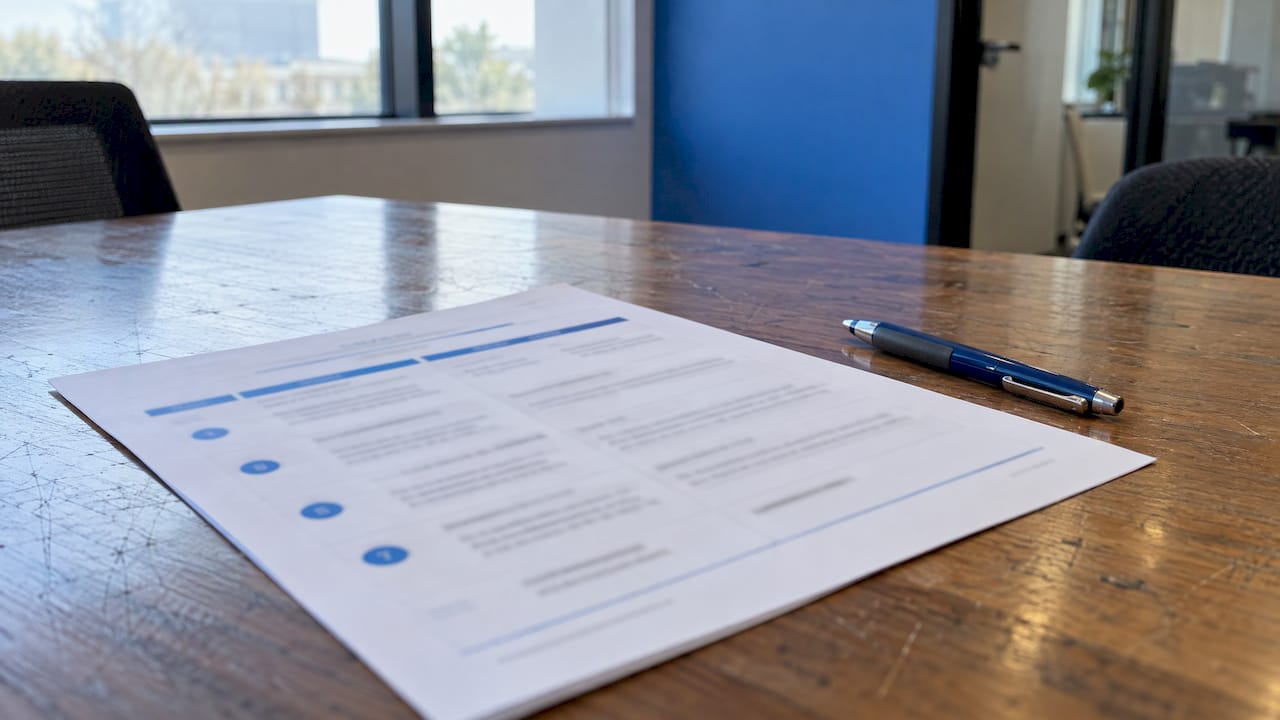
The best format is a shared document both sides can see. A mutual action plan lists the steps from here to signature, such as security review, legal redlines, budget approval and onboarding kickoff, with the dates and the people responsible for each. It turns a vague intention into a visible schedule, and it exposes any missing stakeholder early.
If the delay sits on your side, such as slow pricing approvals or contract exceptions, fix that first. The deal desk process explains who runs those approvals and how to speed them up. A buyer who waits two weeks for a quote has already started to cool.
When a discount or concession helps
A discount is the last tool, not the first. It works only when price is the real blocker, and you know that because the buyer said so, not because you assumed it. If the champion left, a lower price changes nothing. If the group disagrees, a lower price can even signal that the original number was soft.
When price is the stated barrier, use concessions with structure:
- Tie the offer to something you want, such as a signature by a fiscal period end, a longer term or a reference.
- Trade, do not give. Offer a smaller starting scope, a phased rollout or adjusted payment timing before you cut the rate.
- Check the effect on your own margins and on other open deals before you extend it.
A concession that arrives with a clear deadline and a clear condition tends to move a deal. One offered with no condition teaches buyers to wait.
Step 6: Set the deadline, then close out what will not move
Every stalled deal needs an end date. A workable rule: the rep has one week to revive the deal, move it back to an earlier stage with an honest reason, or mark it closed lost. If none of those happens, the manager removes it. Some leaders also run a purge in the middle of each quarter to clear out dead opportunities and reset the forecast.
Closing a deal lost is not giving up on the account. Mark the reason accurately, set a reminder to check in when a real trigger could return, and move on. The closed-lost reasons you record today become the training data for the next quarter's discovery calls.
Teams that want help running this review at scale can look at AI for pipeline reviews, which covers how sales leaders use AI to flag inactive deals and summarize pipeline risk. If adoption is the issue, read why most teams stall on sales AI.
A 30-minute weekly routine for stalled deals
Revival works when it is a habit, not a fire drill. A manager and rep can run this in half an hour each week:
- Filter for deals with no two-way contact since the last review.
- For each, name the group: slow, stuck or dead.
- For stuck deals, state the blocker in one sentence and the one action that tests it.
- Confirm the second contact and the next dated step.
- Close out anything past its deadline and log the reason.
By the end you should have fewer deals, each with an owner, a blocker and a date. A smaller, truer pipeline forecasts better and gets reps back to the buyers who are actually moving.
Our perspective
After more than 25 years building SDR and business development teams, including at Informatica, RingCentral and Cisco-WebEx, I have seen the same pattern: stalled deals are rarely a mystery. They are a management habit.
The teams that recover revenue are not the ones with the cleverest email template. They are the ones where a leader reviews quiet deals every week, asks the rep what the buyer said in their own words, and insists on a dated next step. They also have the nerve to cut a deal that is not real.
AI makes the review faster. It can flag inactivity, summarize call notes and show where deals stop. But it does not replace a leader who knows what a healthy conversation sounds like. That judgment is what I bring to a sales development or business development role, and it is what I teach in my books and on The AI for Sales Podcast.
If your pipeline looks full and your forecast keeps missing, start with the quiet deals. They will tell you what is wrong with the process.
Chad
Work with Chad on your pipeline
If you lead a company in Colorado or beyond and need a sales development or business development leader who has scaled teams at market-leading companies, start at chadburmeister.com. Chad also runs speaking and workshop engagements for sales teams, including sessions on AI-powered pipeline growth, and you can see those on the speaking and workshops page.
For teams that need a broader reset of their sales motion, our guide to hiring a sales turnaround consultant explains what that work involves.
FAQ
How long should I wait before calling a deal stalled?
There is no universal number. Base it on your own sales cycle: look at how long your won deals typically go between buyer replies and set your threshold above that. Many teams start flagging a deal after about three weeks of no two-way contact, then review it with a manager.
Should I keep emailing a prospect who has gone silent?
Keep going, but change what you send. Repeat nudges get ignored, while a message with new information, a smaller ask or a polite close-out note gives the buyer an easy reason to answer. Switch channels too, for example from email to a phone call.
Does a discount revive a stalled deal?
Only when price is the real, stated blocker. Offer it with a condition, such as a signature by a set date or a longer term, and try adjusting scope or payment timing first. If the cause is a silent champion or a divided buying group, a discount will not help.
When should I give up and close the deal lost?
When the rep has tried a real re-engagement, found no new contact and received no reply within the deadline you set. A common rule is one week to revive, re-stage or close. Record the reason and schedule a future check-in if a trigger could bring the buyer back.