The best way to handle objections with AI follows one sequence: classify the real concern behind the buyer's words, retrieve an approved piece of evidence that fits it, suggest a single clarifying question, and let the rep answer in their own voice. Research from the Harvard Business School AI Institute backs this approach, and we build our client work around the same principle: AI supports the decision, the rep makes it.
TL;DR:
- Harvard Business School AI Institute found that a stopping agent improved expected sales roughly 30% when applied to 11,627 calls predicted to fail.
- Live assistance should stay narrow, surfacing one question or a pause signal; after a call, AI can draft emails and prepare manager coaching notes.
- AI cannot read body language or approve pricing and contract exceptions; route uncertain outputs to human review and limit retrieval to approved evidence.
- Pilot one or two use cases for 30 to 90 days, establish conversion, time saved, and response quality baselines, then review flagged outputs.
Table of Contents
- Why AI helps sellers handle objections better
- Common objection categories and an AI workflow for each
- Real-time conversation intelligence versus post-call workflows
- What the research shows and how to use the evidence
- Practical implementation checklist: pilot, govern, coach, scale
- Author perspective: why sales leaders should pilot objection AI now
- Optional help: workshops and pilot guidance for sales teams
- FAQ
- Sources
Why AI helps sellers handle objections better
Objections rarely arrive in a vacuum. A buyer's hesitation on a call often connects to something said in an earlier email, a CRM note, or a prior demo, and AI is well suited to surfacing that pattern before the rep even opens their mouth.
Used well, AI helps sales teams in a few concrete ways:
- Detects recurring objection patterns across calls, emails, and CRM notes that a single rep would miss.
- Pulls the right evidence (case study, pricing comparison, testimonial) tied to the specific concern raised.
- Scales a kind of personalization that would take a human hours to assemble manually.
- Flags coaching moments for managers by tagging how a rep actually responded in the moment.
AI falls short in other areas. It cannot read body language, weigh the emotional stakes of a negotiation, or make a pricing or contract exception safely without a human reviewing the call first. Treat it as decision support, not a decision-maker.
Common objection categories and an AI workflow for each
Most objections sort into a small number of buckets, and each one benefits from a slightly different AI-assisted sequence. Mapping objection type to workflow keeps reps from treating every pushback the same way.
- Price or budget: clarify whether the concern is actual budget ceiling or perceived value, retrieve an ROI figure or cost comparison, and prompt the rep to ask what budget range the buyer expected.
- Timing or "not now": clarify what event or milestone is driving the delay, retrieve a relevant case study showing results within a similar window, and prompt a question about what changes after that milestone passes.
- Incumbent or competition: clarify what's working and what isn't with the current solution, retrieve a differentiated proof point, and prompt a question about what a better outcome would look like.
- Authority: clarify who else needs to weigh in, retrieve a one-pager built for that stakeholder, and prompt a question about what that person cares about most.
- Fit or requirements: clarify the specific requirement in question, retrieve documentation or a configuration example, and prompt a question confirming whether that requirement is a must-have or nice-to-have.
- Trust or risk: clarify the source of hesitation, retrieve a security or reference document, and prompt a question about what evidence would resolve the concern.
- "Send me information": clarify what decision the information needs to support, retrieve material matched to that decision, and prompt a question about the review timeline.
In every case, the rep delivers the response. AI's job stops at surfacing the right clarifying question and the right proof point.
Pro Tip: A short clarifying question paired with one relevant proof point beats a long AI-drafted rebuttal almost every time.

Real-time conversation intelligence versus post-call workflows
AI plays a different role depending on when it's used. Live on a call, it needs to be fast and minimal; after the call, it can be thorough.
Real-time use fits a narrow set of jobs:
- Flagging low confidence in how a call is progressing.
- Surfacing a single clarifying question a rep can ask next.
- Signaling when it's time to pause, redirect, or escalate rather than keep pushing.
Post-call work carries more weight. This is where AI drafts a follow-up email referencing the specific objection raised, builds coaching notes for a manager, or retrieves content for the next similar call. The Harvard Business School AI Institute research introduces a useful idea here: a "stopping agent" that predicts, often within about a minute of conversation, when a call is unlikely to convert. Sometimes the right response to an objection isn't a better rebuttal. It's recognizing the call has run its course and reallocating effort elsewhere. For more on turning call data into coaching action, see our frameworks for AI-driven call coaching.
What the research shows and how to use the evidence
The case for AI-assisted objection handling rests on a small set of studies worth knowing in detail, not just citing.
The Harvard Business School AI Institute analyzed a large dataset of sales calls and found that a stopping agent, applied to quit or reallocate effort on calls predicted to fail, improved expected sales significantly. The model could often make that prediction after about 60 seconds of conversation, reframing persistence as an optimization question rather than a willpower test.
Other research rounds out the picture:
- Baylor's Keller Center found that matching message style (informational versus emotional) to a buyer's shopping goal lifted retail and real-estate sales outcomes substantially; the matching principle applies to B2B conversations too, though more cautiously.
- A California State University study used GPT-4 to tag active-listening behaviors at scale and found linguistic style matching correlated with better outcomes, while tactics like crosstalk hurt results.
- NIST's AI Risk Management Framework recommends treating generative AI as a governed process: define intended use, map failure modes, and assign human responsibility for reviewing and correcting outputs.
Each study points the same direction: AI adds real value when it informs a human decision, not when it replaces one.
Practical implementation checklist: pilot, govern, coach, scale
A 30 to 90 day pilot is enough to prove or disprove value without overcommitting budget or rep attention.
- Pick one or two use cases. Live-assist prompting and post-call follow-up drafting are the easiest starting points, and a CRM-first setup keeps data clean from day one. Our guide to a CRM-first AI roadmap walks through the setup choices.
- Set a baseline. Track conversion rate, time saved per call, and response quality before the pilot starts so the comparison means something.
- Define governance up front. Approve the evidence sources AI can retrieve from, set confidence thresholds for live suggestions, and write clear rules for when a call gets paused, disqualified, or handed to a manager.
- Log low-confidence outputs. Anything the system flags as uncertain goes into a review queue instead of straight to the rep.
- Build coaching into the rhythm. Use AI-tagged calls for manager reviews, update the evidence catalog and prompts weekly, and measure whether rep behavior actually changes, not just whether a quality score moved. Our playbook on turning AI meeting notes into manager coaching covers this step in detail.
Pro Tip: Treat the first 30 days as a data-collection exercise, not a victory lap: the goal is a clean baseline, not a finished rollout.
Author perspective: why sales leaders should pilot objection AI now
We've watched enough rollouts stall to know the common failure mode: teams skip the baseline, skip governance, and wonder six months later why nobody trusts the tool. The fix is almost always the same. Start with one use case, measure it honestly, and put a human in the loop on anything uncertain. Governance isn't the slow part of adoption. It's the part that makes adoption last.
— Chad
Optional help: workshops and pilot guidance for sales teams
For teams that want a guided path instead of building the pilot from scratch, we offer sessions and cohort-based adoption support around this kind of rollout.
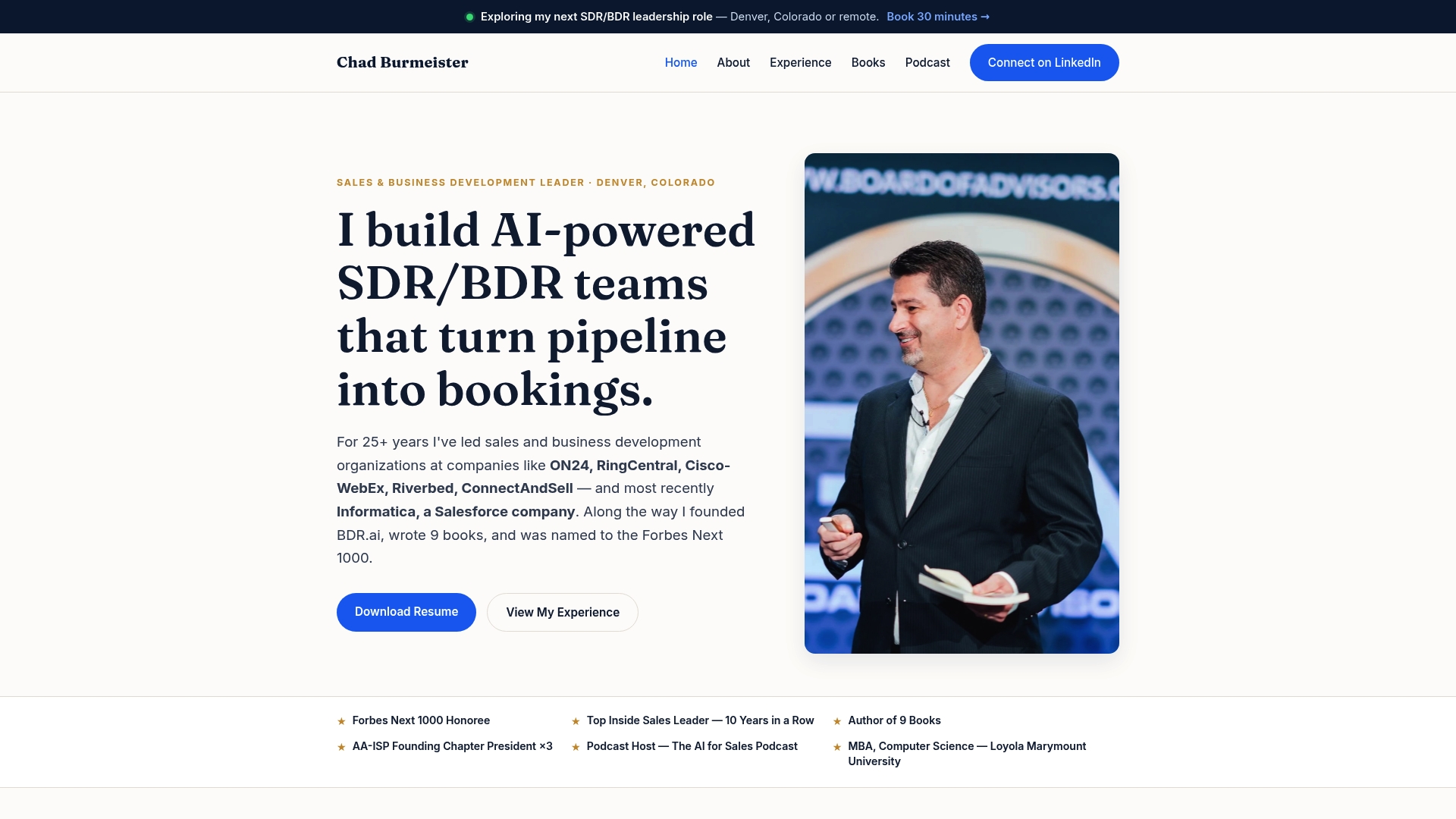
- Speaking: keynote sessions on AI-driven objection handling and pipeline growth for sales organizations.
- Workshops: hands-on sessions to design a governed pilot with your own CRM and evidence library.
- Be Extraordinary Groups: ongoing cohort support for leaders rolling out AI across their sales team.
Details on booking a session are on our books and speaking page.
FAQ
What is the 30% rule for AI?
It refers to Harvard Business School AI Institute research showing that a "stopping agent," applied to sales calls predicted to fail, improved expected sales by roughly 30% when used to quit or reallocate effort. It's not a universal rule, but a specific finding from a study of 11,627 calls.
What are the three golden rules for objection handling?
Definitions vary, but a common version centers on listening fully before responding, clarifying the real concern instead of guessing at it, and responding with one relevant point rather than a long rebuttal. AI tools support all three by surfacing patterns and retrieving evidence, while the rep still delivers the response.
What are the 5 steps of objection handling?
Most frameworks follow a similar arc: listen, acknowledge, clarify, respond with relevant evidence, and confirm the concern is resolved before moving forward. AI fits naturally into the clarify and respond steps by suggesting a question and surfacing approved evidence.
What are the 3 F's in sales?
The "3 F's," commonly cited as feel, felt, found, is a classic acknowledgment technique for addressing objections empathetically before responding with evidence. It works alongside AI-assisted retrieval, since the human acknowledgment still needs to come from the rep.
How do sales teams keep AI objection handling authentic?
Authenticity holds up when AI stops at suggesting a question or retrieving evidence, and the rep delivers the actual words. Teams that let AI draft full rebuttals risk a flat, scripted tone that buyers notice quickly.
Sources
- The Power of AI Stopping Agents | Harvard Business School AI Institute
- Listening advantage: match your message to buyers' shopping goal | Baylor Keller Center
- Enhancing sales through effective salesperson active listening | ScholarWorks
- Artificial Intelligence Risk Management Framework: Generative Artificial Intelligence Profile | NIST