Sales keynote fees vary widely, from lower fees for emerging speakers to much higher fees for celebrity names, and most corporate sales events land in a mid-market band. Plan on an established speaker's fee as your working number, then adjust for customization, travel and exclusivity. Those three levers move a quote faster than anything else, and they are the ones you can actually negotiate.
TL;DR:
- Ask established speakers for itemized quotes, since standard fees usually cover the keynote, basic slides, and a short prep call, not added services.
- Price customization, workshops, recording rights, extra onsite time, branded materials, and upgraded travel separately; compare total costs rather than headline fees.
- Remote talks usually reduce travel costs, but paid registrations, high production values, or interactive formats can bring virtual fees to or above live event rates.
- Contracts commonly require a 50% nonrefundable deposit at signing, with full payment sometimes due 30 days ahead for travel heavy events.
- Set the behavior you want reps to change, then negotiate scope through a shorter Q&A or flexible date before seeking a lower fee.
Table of Contents
- What do sales keynote speakers typically charge?
- Which factors push a keynote fee up or down?
- What does a keynote fee include, and what costs extra?
- How does virtual versus in-person booking change the price?
- What are the standard deposit, payment and cancellation terms?
- Why can you trust this guidance on keynote budgets?
- Why a fee is the wrong first question
- Want a sales keynote that is built around your pipeline?
- FAQ
- Sources
What do sales keynote speakers typically charge?
No single price list governs this market. A speaking fee is a negotiated payment, and it varies widely with a speaker's experience and demand. That is why published ranges differ and why many quotes arrive as bespoke proposals rather than rate cards. The bands below are working planning heuristics, not a published market survey, so treat them as a starting point for conversations.
- Emerging speakers: Often early in their speaking careers, with real field experience but a small stage résumé. Expect a lower fee, a standard talk, and less flexibility on customization.
- Established corporate speakers: The middle of the market and where most sales kickoffs and conferences shop. You get a polished keynote, a prep call, and some tailoring to your team's quota story.
- Top-tier and celebrity speakers: Authors, former executives and household names. Fees climb steeply, calendars are tight, and bookings often come with firm rules about travel class, staging and content approval.
The most common outcome for a planner is a booking that lands near the middle band, so build your first budget there and treat the other two as the floor and ceiling of your search.
Event organizers already work this way elsewhere in their budgets. Conferences routinely publish tiered prices and explicit fee lines, as the Gartner sales conference registration page shows. Packages such as those on the Inc. 5000 Conference ticket page list prices of $2,695 and $2,095 with itemized inclusions. Use the same logic with speakers: ask for line items so you can compare like with like.
Published conference packages list specific price points, such as the $2,695 and $2,095 Inc. 5000 packages. Speaker fees deserve the same itemized treatment, so ask every candidate for a line-by-line quote.
Which factors push a keynote fee up or down?
Fee bands are only the starting point. These variables decide where inside a band your quote lands:
- Reputation versus topical demand: A long track record raises the price, but so does a hot topic. AI in sales is in demand right now, and speakers with proven results in it can price above their résumé alone.
- Customization and prep: A talk rebuilt around your product, your competitors and your quota story takes research hours. Those hours show up in the fee.
- Date, exclusivity and competing offers: Peak season for sales kickoffs is early in the year. A speaker holding two offers for the same week will quote higher, and exclusivity clauses that bar them from nearby events add a premium.
- Travel and logistics: Distance, flight class, hotel and ground transport all matter, as does whether the speaker stays for dinner and the breakout sessions.
- Event length and format: A shorter opener costs less than a longer keynote with Q&A and a fireside chat.
- Audience size and access: A large closed audience of your own reps is different from a ticketed open event, where the speaker also lifts your registration revenue.
Consider three scenarios. A low-cost combination is an established speaker, a standard talk, an off-peak date and a driveable city. A medium-cost one adds light customization and a flight. A high-cost one stacks a hot topic, peak-season exclusivity, a fully rebuilt talk and a multi-day presence with a workshop.
Pro Tip: Negotiate scope, not the headline price: ask what you can trade, such as a shorter Q&A, a flexible date or a standard talk with a custom opening, before pushing the fee itself down.

What does a keynote fee include, and what costs extra?
Comparing quotes only works when you know what each one covers. A standard fee usually buys the core presentation, a basic slide deck and a short prep call with the organizer. Anything beyond that tends to appear as a separate line.
Common extras to price out:
- Heavy customization: Research, interviews with your reps and a fully rebuilt deck.
- Workshops or breakouts: A skills session after the keynote is a different product with its own price.
- Recording and licensing: Using video of the talk beyond the live room usually requires permission and sometimes a fee.
- Additional onsite time: Dinner appearances, meet-and-greets and second-day sessions.
- Branded collateral: Co-branded handouts, playbooks or a book bundle for attendees.
- Upgraded travel: Business class, private transfers or extended hotel stays.
Ask every speaker for a line-item quote, then model total cost: fee, travel, recording rights and any workshop. Add a contingency of your own choosing for surprises. If you also need photos or highlight video from the stage, plan that cost separately; providers such as on-site conference speaker headshot and event photography services are worth pricing early rather than after the keynote is booked.
How does virtual versus in-person booking change the price?
Virtual keynotes often cost less than in-person ones for simple reasons: no flights, no hotel, no lost travel days, and a shorter time commitment for the speaker. A planner who only needs a 30-minute talk to a distributed team can usually save meaningfully by going remote.
That discount is not automatic. Some virtual and hybrid bookings command fees equal to or above in-person ones:
- High production values: A professionally produced broadcast with multiple cameras and a studio setup takes real preparation.
- Paid registrations: If attendees pay to watch, the speaker is helping drive your revenue and may price accordingly.
- Interactive formats: Live polls, breakout rooms and extended audience Q&A take more energy and prep than a one-way talk.
For budgeting, set aside separate lines for recording and licensing rights and for AV production. A hybrid event needs a speaker who can work a room and a camera at once, and your AV team needs to be briefed on that before the date, not the morning of.
What are the standard deposit, payment and cancellation terms?
Contract norms are more standardized than fees. According to LegalClarity's speaker agreement guide, the norm is a 50 percent nonrefundable deposit at signing, with the remainder due before or on the event date. Many speakers require the full balance 30 days in advance for events involving significant travel. Cancellation inside 60 days often triggers full fee liability.
Key points to settle before you sign:
- Deposit percentage and what makes it nonrefundable.
- Balance due date, especially for travel-heavy events.
- Accepted payment methods and late-payment terms.
- The cancellation window and how much of the fee you owe inside it.
Use this checklist when reviewing any speaker agreement:
- Confirm the topic, format, length and level of customization in writing.
- List who pays for which travel costs and at what class.
- Spell out recording, licensing and reuse rights.
- Match payment dates to your finance team's calendar.
- Define cancellation terms for both sides, including rescheduling.
- Check insurance and force majeure language.
Why can you trust this guidance on keynote budgets?
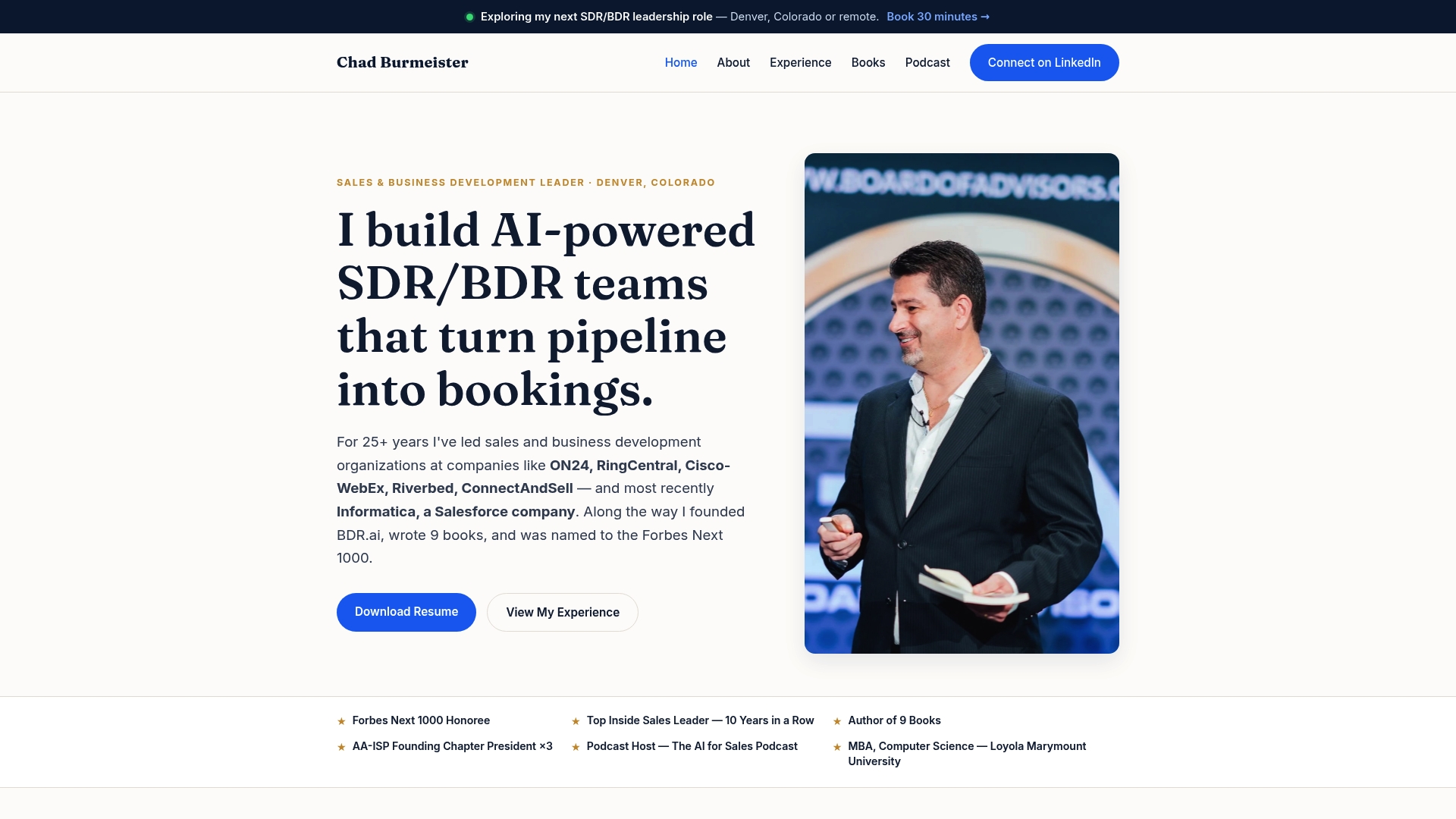
We have spent years scaling sales teams at companies including Informatica, RingCentral and Cisco-WebEx, and we have written books, including AI for Sales 2.0 and Mastering B2B Lead Generation with LinkedIn & AI. We also host The AI for Sales Podcast. That mix informs our perspective on sales and speaking.
If you want to go deeper, our related posts cover practitioner-led sales keynote themes, a sales kickoff agenda blueprint, and sales consulting benchmarks that show how keynote fees fit inside a wider sales budget. Booking a keynote is a purchasing job, and our speaking and workshop work is built around the same outcomes planners are paid to deliver: a room of reps that leaves with a plan.
Why a fee is the wrong first question
Planners almost always start with price, and I think that is backwards. A keynote is not a commodity, and the cheapest quote can be the most expensive outcome if your reps walk out entertained and unchanged. The better first question is what you want your sellers to do differently after the event, then work backward to the speaker, format and budget that can get you there.
Conventional advice says to get three quotes and pick the middle one. That treats speakers as interchangeable, which they are not. A speaker who has run a pipeline will talk about your reps' real objections; a polished motivational name will not. Ask for the specific behaviors the talk is designed to change, and ask for a follow-up plan, not just a slide deck.
Prioritize in this order: the outcome, the fit, the contract terms, and only then the fee. Negotiate scope before price, and protect your budget with a clean contract rather than a hard bargain.
— Chad
Want a sales keynote that is built around your pipeline?
We offer speaking and workshops designed for sales conferences and kickoffs, with talks that tie directly to pipeline and rep behavior, not just energy in the room. You can review topics, bookable formats and contact details on our speaking and workshops page, and see how a keynote can pair with structured programs on our curriculum page. For current pricing details, see our website; send us your date, audience size and goals, and we will come back with a clear, line-item proposal.
FAQ
What is a reasonable speaking fee for a sales keynote?
A reasonable fee is one that matches the speaker's band, your customization needs and your format. For most corporate sales events, that means the established-speaker range rather than the emerging or celebrity ends. Ask for a line-item quote so you can compare like with like.
What are the typical fees for keynote speakers?
Fees depend on experience, demand, topic and logistics, and the speaking fee concept covers a wide spread from newer speakers to major names. Many quotes are bespoke rather than published, so expect to request a proposal. Customization, travel and exclusivity are the usual drivers of difference.
How much of a keynote fee is paid up front?
The common norm is a 50 percent nonrefundable deposit at signing, with the balance due before or on the event date, per LegalClarity. For travel-heavy events, many speakers ask for the full balance 30 days ahead.
Do celebrity speakers like Oprah or Mark Cuban publish their fees?
Generally no. Fees for celebrity names are rarely published and are quoted per engagement, so any figure you see online is an estimate. If a household name is on your wish list, budget in the top-tier band and expect firm terms on travel and content.
Are virtual keynotes always cheaper?
Not always. Remote talks usually save travel costs, but high-production, paid-registration or interactive virtual events can match or exceed in-person fees. Budget separately for recording rights and AV production.
Sources
- Speaker Agreement Template: Key Clauses to Include - LegalClarity
- Pricing and Registration
- Tickets: 2026 Inc. 5000 Conference and Gala
- En