Choose practitioner led, framework first keynote themes that map to a measurable sales behavior change, not applause. Three that consistently earn their slot: AI as a sales teammate, pricing and closing confidence, and multithreading complex deals. Below is a working list of ten themes, a checklist for matching theme to goal, and the briefing steps that turn a one hour talk into something a sales team still uses in ninety days.
TL;DR:
- Choosing a keynote theme aligned with measurable sales behavior change is crucial, with AI, pricing confidence, and multithreading being core options.
- The event objective, audience makeup, and targeted KPI should guide theme selection, emphasizing skill-building over motivation-only talks.
- Briefing speakers on commercial priorities and recent deals helps tailor content that addresses actual team challenges and desired outcomes.
- Scheduling placement influences the keynote's impact, with opening slots suited for mindset themes and closing slots for commitment-driven topics.
- Turning a keynote into lasting change requires manager-led reinforcement, tracking adoption over 90 days, and linking framework use to pipeline metrics.
Table of Contents
- Sales Keynote Themes That Build Skills, Not Just Energy
- How to Pick the Right Theme for Your Event
- What to Tell the Speaker Before They Write a Word
- Where the Keynote Belongs on the Agenda
- Turning a Keynote Into Behavior Change
- Why Practitioner Credibility Changes the Room
- The Gap Between a Good Keynote and a Useful One
- Booking Chad Burmeister for Your Next Sales Event
- Sources
Sales Keynote Themes That Build Skills, Not Just Energy
A good sales conference theme has to survive Monday morning. That's the real test, not the applause in the room. The ten themes below each pass that test because they hand reps or managers a repeatable framework, not a mood.
1. AI As a Sales Teammate, Not a Threat AI is becoming table stakes in sales operations, and HubSpot's research on the future of sales frames the real opportunity as operationalizing AI to sharpen human selling skills, not replace them. Best for mixed audiences of SDRs and AEs worried about job security. Takeaway: one AI-assisted prospecting workflow reps implement the following week.
2. Pricing and Closing Confidence Reps who flinch on price lose margin before they lose the deal. Best for AEs and enterprise sellers. Takeaway: a scripted response to the three most common price objections.
3. Multithreading Complex Deals Single-threaded deals stall when the champion changes jobs. Best for enterprise and mid-market AEs selling into committees. Takeaway: a stakeholder map template for every open opportunity over a set deal size.
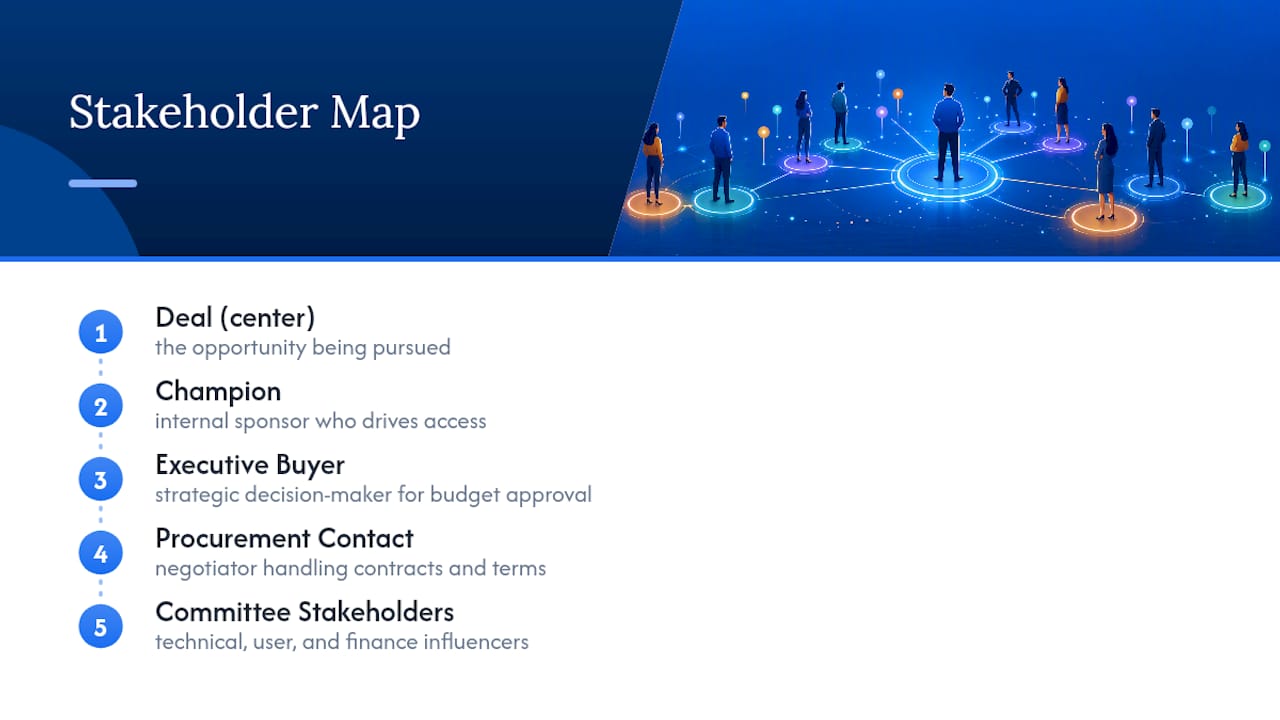
4. Executive Access and C-Suite Selling Getting past procurement and into the boardroom requires a different pitch entirely. Best for senior AEs and sales leaders. Takeaway: a tightened one-page executive briefing document, the kind covered in a C-suite selling playbook.
5. From SDR to Strategic Seller New reps need a career arc, not just a quota. Best for SDR and BDR teams early in tenure. Takeaway: a 90-day skill progression plan tied to specific call metrics.
6. Pipeline Math and Forecast Discipline Sales leaders live and die by forecast accuracy. Best for sales managers and RevOps. Takeaway: a stage-by-stage conversion benchmark reps can self-audit against.
7. Handling Rejection Without Losing Momentum Motivation without a mechanism fades by Wednesday. Best for full sales floors, especially outbound-heavy teams. Takeaway: a daily reset ritual, not a pep talk.
8. Negotiation Tactics for Procurement-Led Deals Procurement teams are trained negotiators; most reps are not. Best for AEs closing six-figure deals.
9. Building a Personal Brand on LinkedIn for Pipeline Growth Social selling still outperforms cold outbound for many B2B teams. Best for SDRs and founders doing their own prospecting. Takeaway: a weekly content cadence tied to specific buyer personas.
10. Leading Through Change: Sales Leadership in Volatile Markets Quota resets and territory changes rattle even senior reps. Best for sales leadership offsites. Takeaway: a communication script for the first team meeting after a reorg.
Notice what's missing from this list: pure hype talks with no mechanism attached. That's deliberate.
How to Pick the Right Theme for Your Event
The right sales kickoff keynote aligns with commercial priorities and turns strategy into behaviors leadership can actually track, according to guidance from Chartwell Speakers. Run your shortlist through this checklist before you book anyone:
- Event objective. Are you launching a new strategy, fixing a stalled metric, or resetting culture after a rough quarter?
- Audience composition. New SDRs need skill-building; seasoned AEs need strategy; sales leaders need frameworks they can teach downward.
- Desired behavior change. Name the one thing you want reps doing differently by day 30.
- Follow-up capacity. If managers can't reinforce a framework afterward, pick a simpler theme.
- KPI to track. Decide the metric before the keynote, not after.
Skill-building themes fit better in breakout-heavy agendas. Strategy and motivation themes fit better as a single, high-visibility session with the whole company watching.
What to Tell the Speaker Before They Write a Word
Event planners should brief speakers on commercial priorities, team makeup, and recent wins or losses, according to Chris Dyer's guidance on choosing a sales keynote speaker. A tight briefing packet includes:
- Commercial priorities for the next two quarters
- Buyer persona profiles the sales team is actually selling against
- Two or three anonymized deal stories, wins and losses
- The specific KPI leadership wants to move
- Any leadership messages that must land alongside the keynote
Ask for a short pre-event call and, if possible, a recorded sales call to review. Deliverables to request in return: a one-page manager summary, short video clips for internal reuse, and a suggested reinforcement sequence for the following weeks.
Pro Tip: Send the speaker one real, recent deal story, win or loss, with names removed. A single concrete example beats a page of bullet points every time.
Where the Keynote Belongs on the Agenda
Placement changes the job the keynote has to do. Speakers should weigh in on where their content fits best, since opening keynotes set the operating rhythm while closing keynotes need to deliver a clear action plan.
- Opening slot: best for mindset themes like AI adoption or leading through change.
- Closing slot: best for anything requiring commitment, like pricing confidence or multithreading.
- Midday slot: best for a deep skill module that feeds directly into an afternoon breakout.
- Avoid scheduling a high-impact theme right after lunch, and keep a senior leader visibly present in the room, not just introducing the speaker.
Turning a Keynote Into Behavior Change
Organizations increasingly want speakers who leave behind frameworks managers can reinforce, not just a memorable hour, per Chartwell Speakers. Three moves make that happen:
- Week one: Managers run a huddle recapping the framework, and reps role-play it once before touching a live call.
- Days 30 to 60: Build the framework into CRM prompts so it shows up where reps already work, distribute the one-pager and any video clips, and track adoption against a single AI-enabled workflow if that was the theme.
- Day 90: Correlate adoption with pipeline movement, specifically conversion rate and deal velocity, not just satisfaction scores.
Track three KPIs: immediate sentiment, medium-term behavior adoption like call plan usage, and long-term pipeline impact.
Why Practitioner Credibility Changes the Room
Sales audiences tune out speakers who never carried a quota. Chad Burmeister built his authority the harder way, over 25 years leading sales and business development teams at Informatica, RingCentral, and Cisco-WebEx, and by writing nine books including AI for Sales 2.0. Great sales speakers are practitioners who've actually run teams, and that field experience is what makes frameworks land instead of bounce, per Chris Dyer's speaker-selection framework.
Three keynote titles delivered and the behavior each one targets: "AI as Your New SDR" (adoption of one AI-assisted prospecting habit), "Multithreading the Enterprise Deal" (stakeholder mapping on every open opportunity), and "Executive Access in 90 Days" (a tightened C-suite outreach cadence). Planners can pair any of these with reinforcement resources like the Sales Kickoff Agenda blueprint or the Executive Access Strategies playbook.
The Gap Between a Good Keynote and a Useful One
Most sales conference themes fail for a boring reason: nobody decided what should be different on Monday. Leadership books a name, the room laughs and claps, and three weeks later the pipeline looks exactly the same. That's not a speaker problem. It's a planning problem, and it starts before anyone signs a contract.
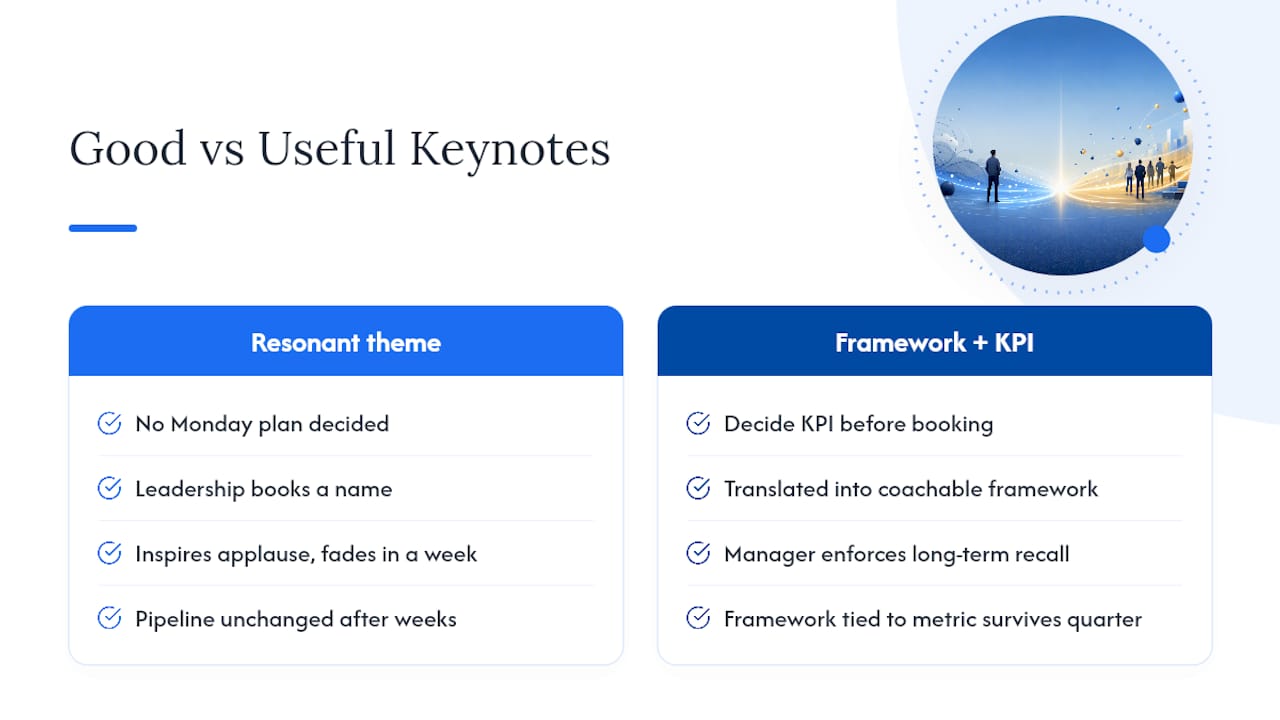
The conventional advice tells you to pick a theme that "resonates" with your team. Resonance is not a strategy. A theme resonates and still changes nothing if it never gets translated into a framework a manager can coach against. Frameworks consistently outperform inspirational talks on long-term recall, and recall is worthless without a manager enforcing it.
If you take one thing from this list, take this: decide your KPI before you book the speaker, not after the keynote. Everything else, the theme, the placement, the briefing, should serve that number. Motivation fades in a week. A framework tied to a metric survives the quarter.
— Chad
Booking Chad Burmeister for Your Next Sales Event
Chad Burmeister works differently from a typical keynote booking because the engagement doesn't end when the applause does. Instead of a one-off talk that fades by Friday, you get a customized keynote built around your actual commercial priorities, plus a manager one-pager and a suggested reinforcement sequence your leadership team can run without hiring outside help.
Engagement formats include a standalone keynote, a half-day workshop for deeper skill practice, or integrated support for a full sales kickoff. Planners typically receive a tailored talk drawn from Chad's nine published books, practical frameworks tested across 25-plus years leading teams at companies like RingCentral and Cisco-WebEx, and a follow-up plan mapped to the KPI you choose. For a preview of how Chad breaks down sales strategy and AI adoption in practice, browse The AI for Sales Podcast. To check dates and discuss your event goals, visit Chad's speaker and consulting page and start the conversation with your event details in hand.
Sources
- Sales kickoff keynote speaker: how to choose — Chartwell Speakers
- How to Choose the Best Sales Keynote Speaker for Your Sales Kickoff — Chris Dyer
- Future of sales predictions — HubSpot