An SDR manager hires, onboards, and coaches SDRs, owns the outbound playbook and the handoff to AEs, manages the CRM and engagement stack, and reports KPIs that turn activity into predictable pipeline. On a team of three to five reps, that person often still carries a small quota as a player-coach; past six reps, the job becomes full-time management. Done well, it shows up in shorter ramp times and SDRs who stay.
TL;DR:
- Teams of three to five reps often need a player coach, while six or more usually require full time management to protect coaching quality.
- Assess internal candidates through a 60 minute pipeline review and coaching role play, and run an external search simultaneously to avoid a rushed promotion.
- Internal mobility programs improve retention by 40% to 50% compared with organizations that hire managers only from outside, but readiness matters more than tenure.
- Require handoffs to include qualification context, complete CRM fields, a named next step, and an AE follow up SLA of one business day.
- Review at least two calls per rep each week, pair feedback with one or two specific improvements, and give each rep a measurable next step.
Table of Contents
- Core responsibilities: hiring, onboarding, playbooks, tools, and reporting
- Hiring and ramp: promoting internally vs hiring externally
- Coaching and performance management: daily and weekly rhythms
- SDR-to-AE handoff: qualification criteria and the handoff checklist
- SDR manager vs SDR team lead: where the roles split
- Practitioner playbook: a 0 to 90 day plan for new SDR managers
- Managing SDR team motivation, morale, and culture
- Budgeting and resource allocation for the SDR team
- Why the SDR manager is the decisive layer for predictable outbound
- Building SDR manager capability through workshops and coaching
- FAQ
- Sources
Core responsibilities: hiring, onboarding, playbooks, tools, and reporting
The job breaks into four areas that repeat every week: people, process, tools, and numbers. An SDR manager typically hires, onboards, coaches SDRs, builds outbound playbooks, manages CRM and sales engagement tools, sets targets, reports performance, and owns SDR-to-AE handoffs, according to job descriptions collected across multiple employer postings.
Hiring and onboarding come first because a bad hire costs months of lost pipeline before anyone notices. A structured first 30 days, covering product training, call shadowing, and a documented ramp checklist, gets new reps dialing with confidence instead of guessing. Our 12-step onboarding checklist is a useful starting template for building that structure.
Playbooks are the second pillar: scripts, sequences, and messaging for both outbound and inbound motions, revised as market response changes. A manager who treats the playbook as a living document, not a PDF from the kickoff meeting, keeps conversion rates from decaying as buyers get pitch-fatigued.
Tool ownership means the CRM and sales engagement platform stay clean enough to trust. That includes:
- Enforcing consistent field entry so pipeline reports mean something
- Auditing sequence performance monthly and retiring steps that underperform
- Reviewing data hygiene weekly, not quarterly, to catch drift early
Reporting closes the loop. Weekly rhythms should track quotas, activity metrics, and pipeline contribution, rolled into a short executive update. Job-site summaries list setting strategies, monitoring performance metrics, and ensuring the team meets outreach and lead generation goals as core manager duties, which lines up with what most functioning SDR orgs actually measure week over week. Our KPI scorecard gives a copyable structure for that reporting cadence.
Hiring and ramp: promoting internally vs hiring externally
Deciding whether to promote an SDR into management or hire from outside comes down to readiness signals, not tenure alone. Five signs worth weighing: consistent quota attainment over two or more quarters, informal coaching of peers without being asked, comfort giving direct feedback, interest in process over just closing activities, and calm under pipeline pressure.
- Run a 60-minute manager simulation with a pipeline review and a coaching role-play, since this format reveals real management skill better than interview questions alone.
- Score the simulation on specificity of feedback, clarity of next steps, and whether the candidate diagnoses the rep's actual problem or just repeats generic advice.
- Run internal development and an external search at the same time so you are not stuck choosing between a rushed promotion and a stalled search.
Pro Tip: Promoting internally tends to pay off. Internal mobility programs improve retention by 40 to 50 percent compared to organizations that only hire management from outside.
A typical SDR ramps to full productivity in a few months, and manager effectiveness is the biggest lever on whether that timeline shrinks or stretches. A mis-hire at the manager level is expensive beyond the obvious: replacing a mid-level manager can cost 50 to 200 percent of annual salary once recruiting, onboarding, and lost productivity are counted.
Coaching and performance management: daily and weekly rhythms
Coaching is what separates a title from a function. A working cadence usually includes:
- Weekly 1:1s focused on pipeline review, not just activity counts
- Live or recorded call reviews, at least two per rep per week
- Side-by-side sessions where the manager listens in or dials alongside a rep
- Short role-play drills before a new sequence or objection pattern goes live
The most useful coaching structure is simple: open with specific praise, flag one or two focused improvements, and close with a measurable next step the rep can act on before the next check-in. Vague feedback like "do better on discovery" changes nothing; "ask one more open question before pitching" does.
Whether a manager stays a player-coach or moves to pure management depends on team size and bandwidth. SDR managers often operate as player-coaches on teams of three to five reps and shift to full-time management once headcount reaches six or more, since coaching quality drops fast once a manager is also chasing a personal number.
KPIs matter here as a diagnostic, not a scoreboard. Low activity with high conversion points to a capacity problem; high activity with low conversion points to a messaging or targeting problem. SDRs who respect their manager tend to name the same traits: great SDR managers lead with transparency, consistent coaching, and firsthand experience in the SDR seat itself, according to a survey of sales professionals on what made their own managers effective.
SDR-to-AE handoff: qualification criteria and the handoff checklist
A clean handoff is where good SDR work either turns into revenue or dies in an AE's inbox. Every handoff should include:
- Qualification notes beyond BANT: timing triggers, stated pain, and who else is involved in the decision
- Complete CRM fields: contact role, company context, and the specific reason the lead is sales-ready
- A clear SLA for AE follow-up, usually within one business day
- A named owner for the next step so the lead never sits untouched
| Handoff element | What it prevents |
|---|---|
| Qualification notes beyond BANT | AE re-asking questions the prospect already answered |
| Complete CRM fields | Lost context when a deal changes hands |
| Defined SLA for follow-up | Leads going cold before the AE even calls |
| Named next-step owner | Leads stalling with no clear accountability |
Our lead scoring thresholds guide is a practical reference for setting the qualification bar before a lead ever reaches an AE. Managers audit handoff quality by spot-checking a sample of transferred leads weekly and tracking how many convert to a first meeting, since pipeline ownership and the SDR to AE handoff show up repeatedly as core manager duties across employer job postings.
SDR manager vs SDR team lead: where the roles split
A team lead usually coaches and mentors peers without formal hiring or firing authority, while a manager owns headcount decisions, budget input, and the playbook itself. The split matters for anyone planning a career move or deciding how to structure a growing team.
- Team leads fit teams of roughly two to four reps where a senior peer can mentor without a full management layer
- Managers make sense once a team passes five or six reps and needs dedicated hiring, reporting, and process ownership
- Introduce a manager layer when reporting and coaching start eating into a lead's own quota performance
- A team lead role is a natural stepping stone toward an SDR manager position, and an SDR manager role is a common path into a broader sales development or revenue operations leadership track
Practitioner playbook: a 0 to 90 day plan for new SDR managers
The first 90 days set the tone for everything after.
- Days 1 to 30: listen to call recordings, audit CRM data, and fix one or two quick wins without rewriting the whole playbook
- Days 31 to 60: roll out playbook and sequence changes based on what the audit revealed
- Days 61 to 90: scale coaching rhythms and measure ramp time and conversion against your day 30 baseline
Our 0 to 90 day remote SDR management plan includes the full template, along with a manager simulation script scored on specificity, coaching quality, and clarity of next steps.
Pro Tip: Keep the same scoring rubric even when you adapt the simulation script for an inbound versus outbound motion.
Managing SDR team motivation, morale, and culture
SDR work is repetitive by design: the same objections, the same rejection, the same pipeline pressure every week. Morale erodes fastest when reps feel like a number on a dashboard rather than someone building a career.
Recognition tied to specific behavior, not just hitting a number, keeps motivation steady between quota cycles. Calling out a well-run discovery call in a team channel does more for culture than a leaderboard ever will. Pairing newer reps with stronger performers for side-by-side calls also builds camaraderie while quietly transferring skill.
Transparency about how quota, comp, and promotion decisions get made removes a lot of quiet resentment before it starts. Reps who understand the path from SDR to team lead to manager tend to stick around longer than reps left guessing about their next move.
Culture also shows up in small operational choices: how call reviews are delivered, whether mistakes get treated as coaching moments or write-ups, and whether the manager protects the team's time from constant process changes. A manager who shields the team from noise while still holding the line on activity standards tends to keep both morale and output high at the same time.

Budgeting and resource allocation for the SDR team
Most SDR budgets split across three buckets: headcount, tools, and enablement. Headcount is usually the largest line, so hiring decisions carry outsized budget weight, which is part of why the internal-versus-external hiring decision matters as much financially as it does culturally.
Tool spend covers the CRM, sales engagement platform, dialer, and any data or intent-signal providers. A manager who audits tool usage quarterly often finds a license or two going unused, freeing budget for something that actually moves pipeline, like better data enrichment or an additional headcount slot.
Enablement spend, training, call coaching software, and playbook development, is frequently the first thing cut under pressure and the first thing that should be protected, since it directly shortens ramp time and reduces the cost of turnover described earlier. A manager building a budget case internally should tie every dollar requested to a specific metric: faster ramp, higher connect rate, or improved handoff conversion, rather than asking for a round number.
Why the SDR manager is the decisive layer for predictable outbound
Pipeline predictability rarely comes from better scripts. It comes from a manager who coaches consistently, protects data hygiene, and owns the handoff like it is their own quota. When I get called into a struggling org, I look first at three things: coaching frequency, CRM discipline, and how clean the SDR to AE handoff actually is. If I had to watch one metric before anything else, it would be new SDR ramp time, since it exposes every weakness upstream.
— Chad
Building SDR manager capability through workshops and coaching
Hands-on workshops, speaking engagements, and small-group coaching programs are available for sales leaders who want the 0 to 90 day plan above built into their own org, not just read about it.
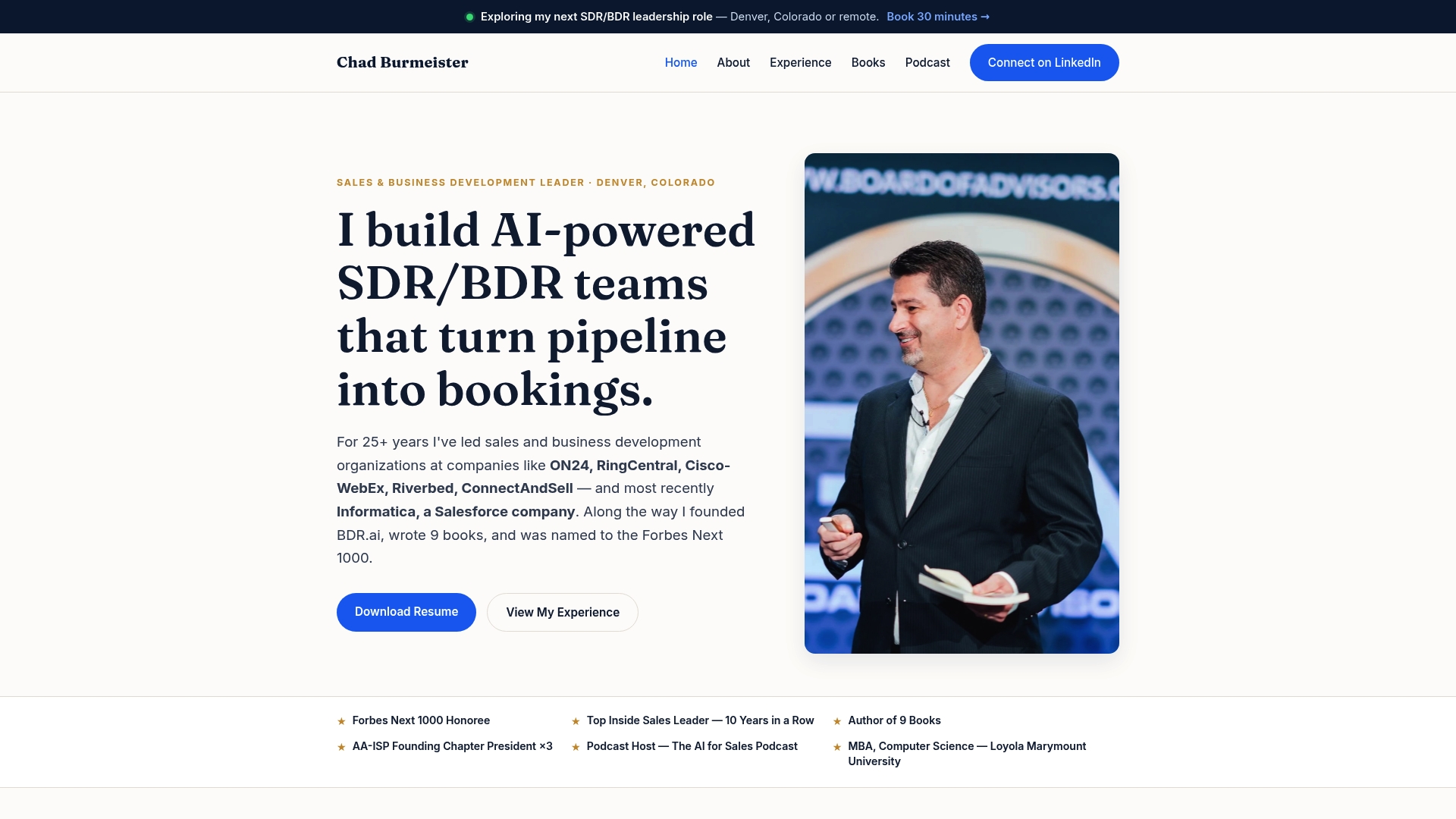
A workshop typically maps directly onto that same ramp: diagnosing coaching gaps in the first session, rebuilding the playbook in the middle sessions, and measuring impact against quota and ramp benchmarks by the end.
- The programs work directly with sales leaders building or rebuilding an SDR management layer
- Sessions draw on extensive experience leading sales development teams at category-defining technology companies
- The curriculum pairs with widely recognized playbooks for teams that want a structured, repeatable rollout
If you are building this capability inside your own team, our Be Extraordinary curriculum is the next step, and our speaking and workshop page has details on booking a session for your organization.
FAQ
What is an SDR career path?
An SDR career typically starts in outbound or inbound prospecting, then moves toward either an account executive track or a management track through a team lead role. Many SDR managers started as SDRs themselves, which is part of why direct experience in the seat is a trait reps value in their managers, according to a survey of sales professionals.
What are the roles and responsibilities of a sales and business development manager?
A sales and business development manager typically hires and coaches reps, owns outbound and inbound playbooks, manages the CRM and engagement tools, sets quotas, and reports on pipeline performance, as reflected in job descriptions collected across employer postings. The role also owns the handoff process that moves qualified leads to account executives.
What are the five key responsibilities of a manager?
For an SDR manager specifically, the core responsibilities are hiring and onboarding, coaching and performance management, playbook ownership, tool and data management, and KPI reporting. These five areas repeat weekly and form the backbone of the job regardless of team size.
Is SDR the hardest sales job?
SDR work is widely considered demanding because of high rejection rates and repetitive daily activity, though "hardest" depends on what a given rep finds difficult. A manager who coaches consistently and keeps the playbook sharp can meaningfully reduce the burnout that makes the role feel harder than it needs to be.
Sources
- Hiring an SDR Manager: Promote Internally or Hire External? (Hiring playbook)
- SDR Manager - Niural Inc. | Built In
- What makes a great manager, according to 60 SDRs | HubSpot Blog
- What is a sales development representative manager? | ZipRecruiter