An AI sales workshop is a hands-on training session that teaches sales professionals practical AI skills, from prompt writing to CRM automation, and ends with a concrete pilot roadmap. It serves sales leaders, SDRs, and managers who need their teams actually using AI tools, not just hearing about them. The best sessions treat the workshop as a diagnostic: they surface what's broken in your pipeline before they teach a single prompt.
TL;DR:
- Use current CRM deal data for prompt labs and tool demonstrations, because anonymized examples produce generic roadmaps and weaken confidence in Monday use.
- Before training, export baseline CRM metrics, choose a format suited to the decision, and budget facilitator support and continued coaching.
- Name a pilot owner before the session ends, set two or three success metrics, schedule weekly meetings, and define data use and incident rules.
- About 72% of organizations using generative AI formally measure its return; track pilot baselines for time saved, reply rates, conversion, and pipeline speed.
- Prove AI in one revenue motion, such as outbound outreach or renewals, before expanding companywide; managers should model tool use and join exercises.
Table of Contents
- Core curriculum: what an effective workshop actually covers
- Choosing the right format and time commitment
- Designing for adoption: leadership alignment and the 90-day roadmap
- Tools and technology categories worth demonstrating
- Measuring impact after the workshop ends
- Sample agendas you can adapt for your team
- A practitioner's checklist before you book a workshop
- Booking a workshop built around your pipeline
- FAQ
- Sources
Core curriculum: what an effective workshop actually covers
A workshop built for results moves past generic AI literacy fast. It gets into the modules sellers will use the same week they attend.
- AI literacy for sellers: what generative AI does well, where it fails, and how to judge an output.
- Prompt templates for sales: structured prompts for outreach, objection handling, and discovery questions.
- CRM workflow integration: connecting AI outputs directly into deal records instead of copy-pasting.
- Email personalization: using account and contact data to generate first-draft messages that still sound human.
- Meeting notes and coaching: turning call transcripts into manager feedback and next steps.
- Proposal drafting: generating and editing first-draft proposals from deal data.
The hands-on part matters more than the lecture part. Strong sessions include live prompt labs, role-play using AI-generated call scripts, and exercises built on sample or, ideally, real CRM deal data pulled from the attendees' own pipeline. Attendees leave able to write working prompts, edit AI output for accuracy and tone, and fold AI tasks into their existing daily routine instead of treating them as a side project.
Choosing the right format and time commitment
Workshop length should match the decision you're trying to make, not the other way around. A leadership team deciding whether to invest needs a different session than a team learning to execute.
- Executive briefings: for leadership alignment and go or no-go decisions on a pilot.
- Hands-on sessions: for rapid upskilling across a full sales team.
- Extended workshops: for team-level adoption, including CRM integration and role-play.
- Extended learning paths: for deep practice and skill building over time.
Each format carries its own prework and staffing needs. Expect to export baseline CRM metrics before a workshop, maintain a reasonable facilitator-to-attendee ratio for hands-on labs, and budget a follow-up coaching window so skills survive past the workshop itself.
Designing for adoption: leadership alignment and the 90-day roadmap
A workshop that ends with applause but no pilot has failed. Adoption depends on what leaders do after the session, not what the facilitator said during it.
Executive sponsorship is not optional. Research on generative AI in B2B sales finds that upper management support significantly influences whether AI tools get adopted and used well, and a related study in the Journal of Business & Industrial Marketing identifies managerial encouragement as the critical factor in embedding AI into daily sales workflows. Managers who model the behavior, not just approve the budget, are what separates a tool that gets used from one that becomes shelfware.
Governance belongs inside the workshop, not bolted on afterward. That means acceptable-use rules, transparency about what data trains or feeds the tools, and a clear feedback and incident process, in line with the NIST AI Risk Management Framework's guidance on generative AI.
- Assign a named pilot owner before the workshop ends.
- Set two or three measurable success metrics tied to the pilot.
- Schedule weekly check-ins through the pilot window.
- Run formal evaluations at regular intervals during the pilot.
- Involve frontline managers directly in the hands-on exercises, not just the opening remarks.
Pro Tip: Bring your messiest, most current CRM deal data into the room. A roadmap built on anonymized sample data produces generic advice; one built on your actual pipeline produces a plan someone will actually follow.
Tools and technology categories worth demonstrating
A workshop doesn't need to pitch a specific vendor to be useful. It needs to show attendees the categories of tools that matter and how they connect to work they already do.
- CRM-first integrations that pull and push data without manual re-entry.
- Meeting-note agents that convert calls into structured summaries and action items.
- Email personalization generators that draft outreach from account and contact fields.
- No-code automation agents that chain simple tasks, like updating a deal stage after a signed proposal.
- Proposal and summary generators that produce first drafts from deal records.
For each category, the demo should show the data flow in and out of the CRM, a few example prompts, sample outputs with visible edits, and a governance checkpoint explaining what gets reviewed before it reaches a customer. Running these demos against the team's own anonymized CRM records, rather than generic sample data, is what makes attendees trust the output enough to use it Monday morning.
Measuring impact after the workshop ends
A workshop without a measurement plan is a one-time event. A workshop with one becomes the start of a pilot you can defend in front of leadership.
- Time saved on administrative tasks like note-taking and proposal drafting.
- Email reply rate change after personalization prompts go live.
- Demo-to-close conversion lift tracked against a pre-pilot baseline.
- Pipeline velocity measured from first touch to closed deal.
Formal ROI tracking is still uneven across companies even as usage grows. About 72% of organizations using generative AI say they're formally measuring its return, while training and capability building continue to lag behind actual tool use, which is exactly the gap a well-structured pilot closes.
Structure the pilot with a baseline measurement before the workshop, a specific target improvement for each metric, a timeline with regular checkpoints, and a named owner for every number. Present results with a simple dashboard and a short executive summary rather than a long report, something our AI sales forecasting playbook covers in more detail for teams building out their first KPI set.
Sample agendas you can adapt for your team
A good agenda is one you can paste into a calendar invite and defend in a planning meeting the same afternoon.
- Half-day leader briefing: Open with an AI literacy and ROI module, move into a CRM data review, and close with a decision checkpoint where leadership signs off on a pilot scope and owner.
- Hands-on workshop, first session: Cover AI fundamentals and run prompt labs using team-specific scenarios, ending with attendees able to write and edit working sales prompts.
- Hands-on workshop, follow-up session: Run CRM integration exercises and role-play using AI-generated scripts, then consolidate the day into a shared pilot roadmap with named owners and metrics.
Prework should include a CRM data export and baseline metrics gathered before the workshop. Afterward, schedule weekly pilot check-ins and manager coaching sessions, a pattern our guide on turning AI meeting notes into coaching walks through for teams building that follow-up rhythm.
A practitioner's checklist before you book a workshop
Most workshops fail the same way: slides, applause, and nothing that survives the following Monday. Insist on real deal data in the room, a named pilot owner before anyone leaves, and measurable KPIs tied to a pilot plan, not a vague promise to "explore AI." Pick one revenue motion, like outbound SDR outreach or renewal management, and prove the model there before rolling it out company-wide.
— Chad
Booking a workshop built around your pipeline
We build workshops and curriculum around the same principle this guide follows: real CRM data, leadership alignment, and a pilot roadmap, not a slide deck that gets forgotten. Our Speaking and Workshops engagements and the Be Extraordinary curriculum are available to explore.
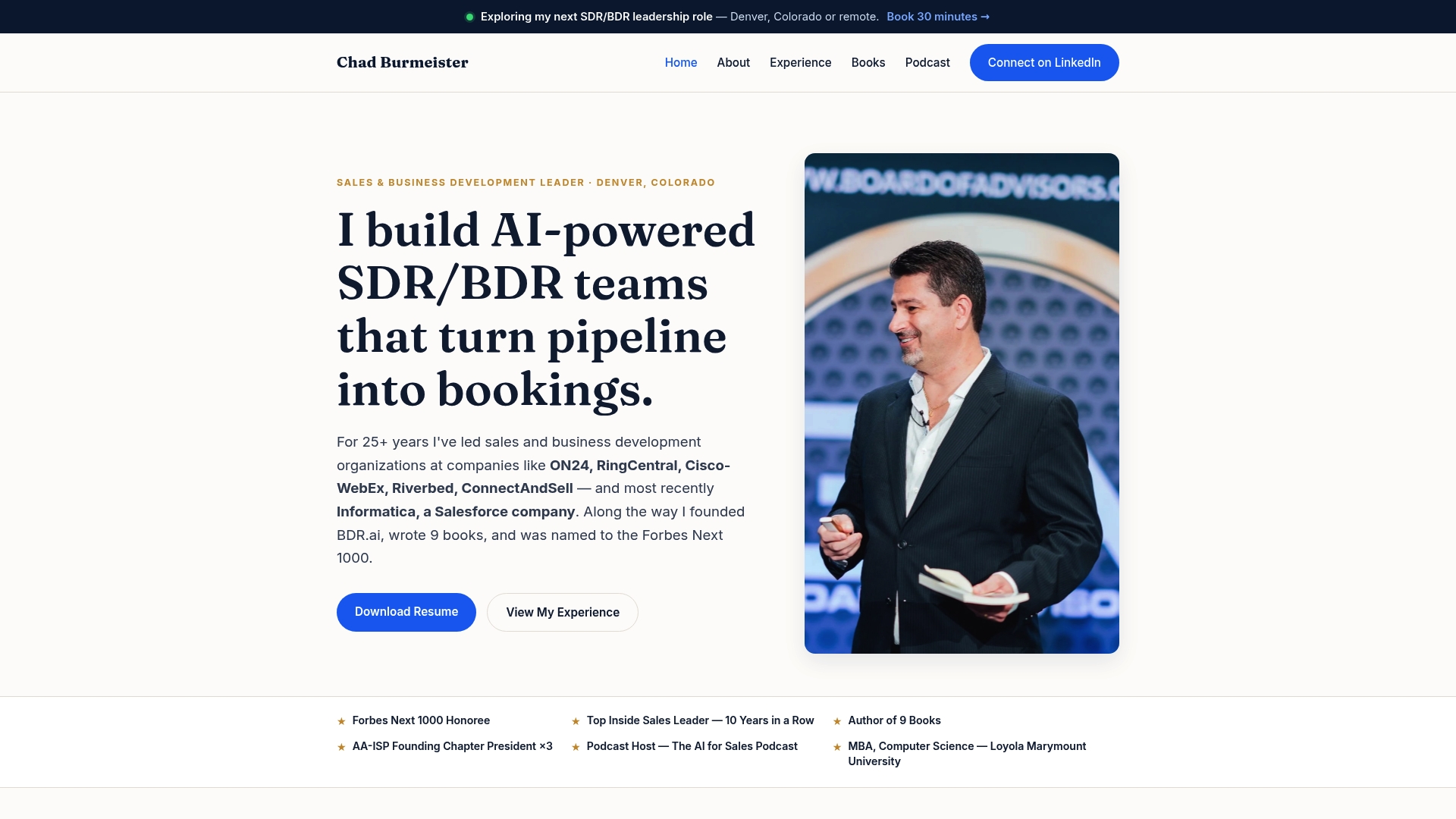
When you book with us, expect a custom agenda built around your sales motion, exercises run against your own CRM records, and a structured session for leadership to align on what success looks like before the team starts. If your workshop demos include lead handoff readiness, a partner like AIViral's verified lead generation workflow is a useful reference point for how qualified replies should look before they hit a rep's queue.
Reach out through our Speaking and Workshops page for a sample agenda or a custom quote, or review the full Be Extraordinary curriculum to see how the modules map to your team's pipeline.

FAQ
How to use AI to make $10,000 a month in sales?
There's no guaranteed path to a specific income figure, since results depend on your product, market, and existing pipeline. What a workshop can teach is how to use AI for faster prospecting, personalized outreach, and shorter sales cycles, which compound into more closed revenue when applied consistently over a pilot.
What is the best AI course for sales professionals?
The strongest option is less about a single branded course and more about finding hands-on training that uses your own CRM data and ends with a measurable pilot. Look for a workshop with named learning outcomes, live prompt labs, and a defined follow-up plan rather than a video course you watch once.
What is the 30% rule for AI?
There's no single, widely recognized rule for AI in sales; phrases like this are used inconsistently across sources. If you encounter it in a specific context, treat it as that source's own framework rather than an industry standard.
Which AI tool is best for sales?
The right tool depends on your use case: CRM-first integrations, meeting-note agents, email personalization generators, and automation agents each solve a different problem. A workshop that demos categories against your own data, rather than pitching one vendor, gives you a clearer basis for choosing.
How does a workshop help with AI tool adoption?
Adoption depends more on leadership behavior than on the tool itself. Research on generative AI in B2B sales finds that managerial support strongly influences whether teams actually use new tools, which is why effective workshops build in manager participation and a concrete follow-up plan rather than ending at the training itself.
Sources
- Emerald
- 2025 AI Adoption Report: Gen AI Fast-Tracks Into the Enterprise - Knowledge at Wharton
- The impact of generative AI on B2B sales performance